

Quenching of steel is a heat treatment process in which steel is austenitized and then cooled at an appropriate cooling rate, so that a martensitic Stable structural transformation occurs completely or within a certain range in the cross-section of the workpiece.
General workpieces: Quenching → Cleaning → Tempering → Sandblasting (or shot blasting, etc.) surface cleaning → Inspection.
Shaft parts and easily deformable workpieces: Quenching → cleaning → Tempering → straightening → stress relief treatment → sandblasting → inspection.
1. Check the quantity, material and size of the workpiece, and check whether the workpiece has cracks, bumps, missing edges, sharp edges, sharp corners, rust and other defects that affect Quenching quality.
2. According to the drawings and process documents, clarify the specific requirements of Quenching , such as Hardness , the scope of local Quenching , etc.
3. According to the requirements of Quenching , the design selects appropriate tools Fixture , binds some workpieces properly, and takes corresponding protective measures at the parts that are prone to cracks, such as binding with iron sheets or asbestos ropes and plugging holes, etc.
4. For workpieces whose surfaces do not allow oxidation and decarburization, heating shall be carried out in Salt Bath Furnace or Pre-Vacuum protective atmosphere furnaces, or the following protective measures shall be taken:
a. Paint protection, it is recommended to use the following paint formula:
① 10% graphite + 90% grease (mass fraction).
② 100gSiO2+5gAl2O3+25gNaSiO3+40gH2O. The thermal coating is 0.05~0.10mm, when the heating temperature is less than 1050℃, it has the effects of oxidation prevention and decarburization prevention.
③ 20g SiO2 + 10g Al2O3 + 10g feldspar + 10g Cr2O3 + 10g SiC + 8g KSiO3 + 12~15g H2O 0 thermal coating 0.2~0.30 mm, it has the effect of anti-oxidation and decarburization when the heating temperature is less than 1200℃.
b. Load the workpiece into an iron box filled with charcoal or used Cast Iron chips, seal it with a lid.
5. For large batches of workpieces, single-piece or small-batch trial quenching must be performed. After the process is formulated, batch Quenching can be carried out, and random inspections must be conducted frequently during the production process.
1. Workpieces of different materials but with the same heating process are allowed to be loaded into the same furnace for heating.
2. All workpieces loaded into the furnace must be dry, and must not be contaminated with oil stains or other dirt.
3. When workpieces with different cross-sectional sizes are loaded into the same furnace, large workpieces should be placed at the rear of Furnace Chamber , and the holding time shall be calculated separately for large and small workpieces.
4. When loading the furnace, the workpieces must be regularly placed on the furnace loading rack or Furnace Bottom plate, and stacked with hooks, pliers or special tools. Do not directly throw workpieces into the furnace, so as to avoid injuring the workpieces or damaging Furnace Lining .
5. Slender workpieces must be vertically suspended and heated in Pit Furnace or salt furnaces to reduce deformation.
6. When loading workpieces for heating in Box Furnace , they are generally arranged in a single layer, with a gap of 10~30mm between workpieces. Small workpieces allow appropriate stacking, but the heat preservation time should be appropriately increased.
1. Heating method
(1) For Carbon Steel and Alloy Steel workpieces, they can generally be directly loaded into a furnace with a temperature 20~30℃ higher than the specified Quenching temperature for heating.
(2) Preheat workpieces with high carbon High Alloy Steel and complex shapes first.
2. Heating temperature selection.
3. Calculation of workpiece heating time: The workpiece in the furnace should be maintained for an appropriate time within the specified heating temperature range to ensure the necessary structural transformation and diffusion. Heating time refers to the time maintained throughout the entire heating process from when the workpiece is loaded into the furnace and electrically heated until it is removed from the furnace. Heating time is related to factors such as the effective thickness of the workpiece, steel type, furnace loading method, furnace loading amount, furnace loading temperature, furnace performance and sealing degree.
4. Selection of effective thickness (applicable to both annealing and Normalizing processes)
(1) Round bar-shaped workpieces are calculated by diameter.
(2) Flat workpieces are calculated by thickness (the insulation coefficient selects the upper limit).
(3) The diameter of a solid cone shall be calculated based on the diameter at 1/3 of the height from the large end.
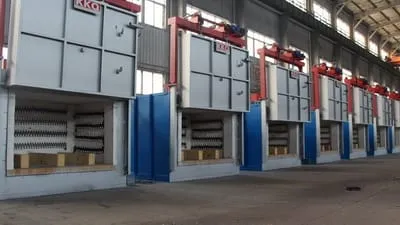
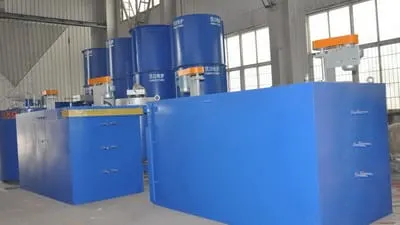
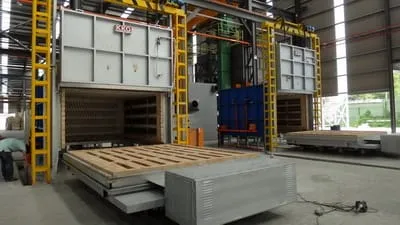
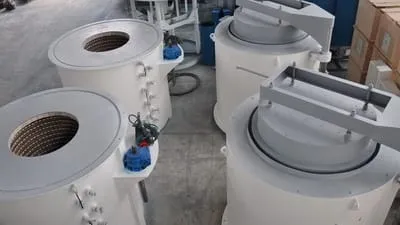
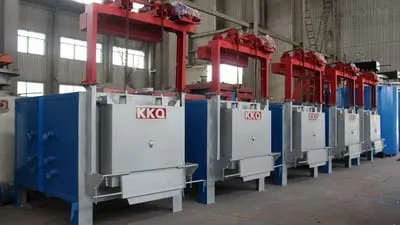

It collects on-site Quenching furnace cases across the country
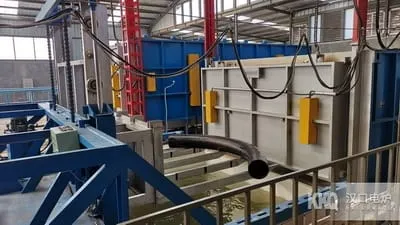
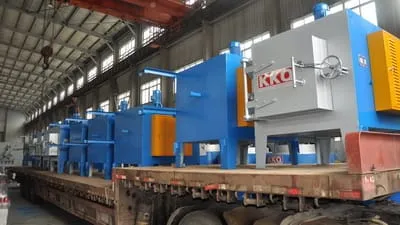
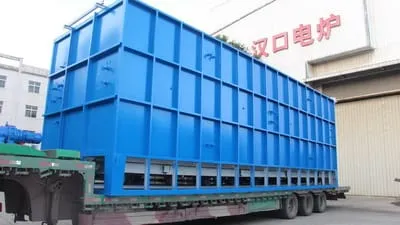
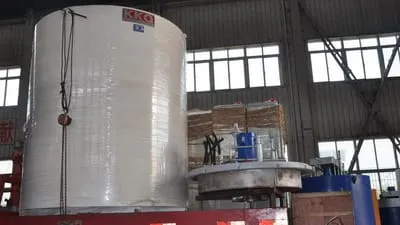
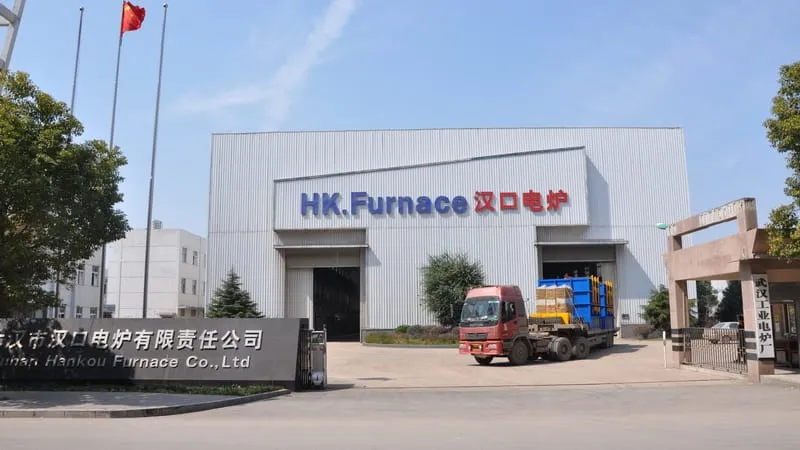
Hankou Furnace boasts 50 years of manufacturing experience

HKFurnace Wechat