

Large The level of Strength of castings is similar to that of forgings, but Plasticity and Toughness are poor, the internal structure is uneven and non-dense, the deviation of internal chemical composition is large, the thermal conductivity is poor and the shape is complex. Therefore, special attention should be paid to eliminating internal stress and preventing cracking during heat treatment, but the harm of hydrogen does not need to be considered. When formulating heat treatment processes, you can refer to the TTT curves, CCT curves and hardenability curves of the same steel grade. But attention must be paid to the effects of uneven chemical composition, coarse grains and other casting defects. The types and purposes of heat treatment are as follows:
1. Diffusion Annealing ( High Temperature Homogenizing annealing). Its main purpose is to eliminate or reduce composition segregation in castings, improve some soluble impurities, and make the chemical composition, internal structure and mechanical properties of castings tend to be uniform and Stable .
2. Normalizing , Tempering . By recrystallizing the internal structure, improve Strength and Toughness , enable castings to obtain good comprehensive mechanical properties, and improve the cutting performance of workpieces.
3. Annealing. Stable Size, structure and properties of castings, so that the Plasticity , Toughness of castings are significantly improved. During the annealing process Easy Operation , the heat treatment stress is very small, but the Strength , Hardness of the workpiece are slightly lower.
4. Quenching and tempering. Since the heat treatment stress is very large when Quenching , it should be used with caution. It is only used in cases where high performance is required for castings, and can only be carried out after castings have been fully annealed. Quenching and tempering can greatly improve the comprehensive mechanical properties of castings.
Stress relief annealing. Its purpose is to eliminate internal stress in castings, mainly eliminate stress in repaired parts, repair weldments, welded parts and rough machined parts, to prevent defects from causing changes in the size and performance of the workpiece Stable . The temperature of stress relief annealing must be 10-30 Celsius lower than the workpiece Tempering temperature, the holding time is more than δ.25 Hour (δ is the maximum wall thickness of the workpiece, in mm), and then slowly cool in the furnace.
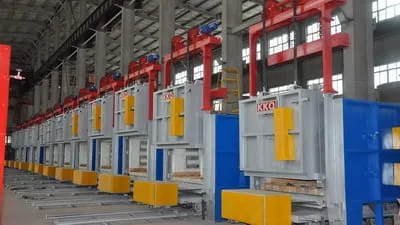
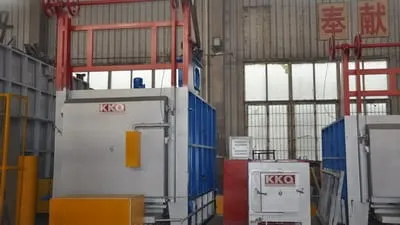
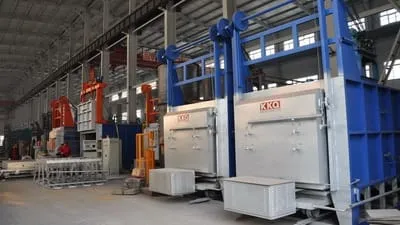
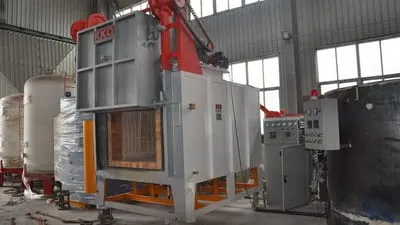

It gathers on-site application cases of heat treatment furnaces across China
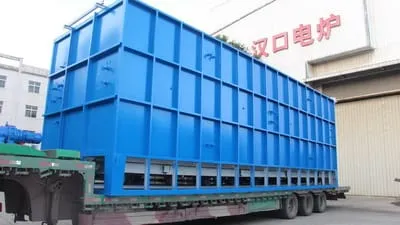
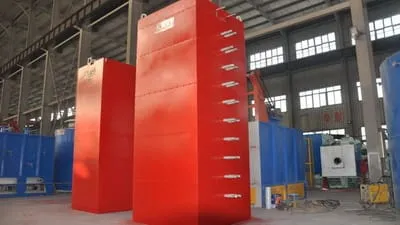
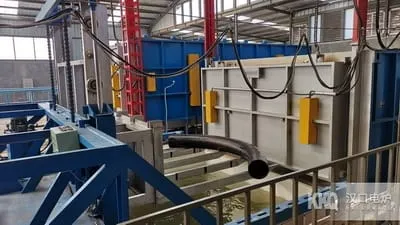
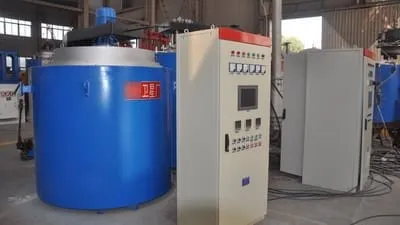
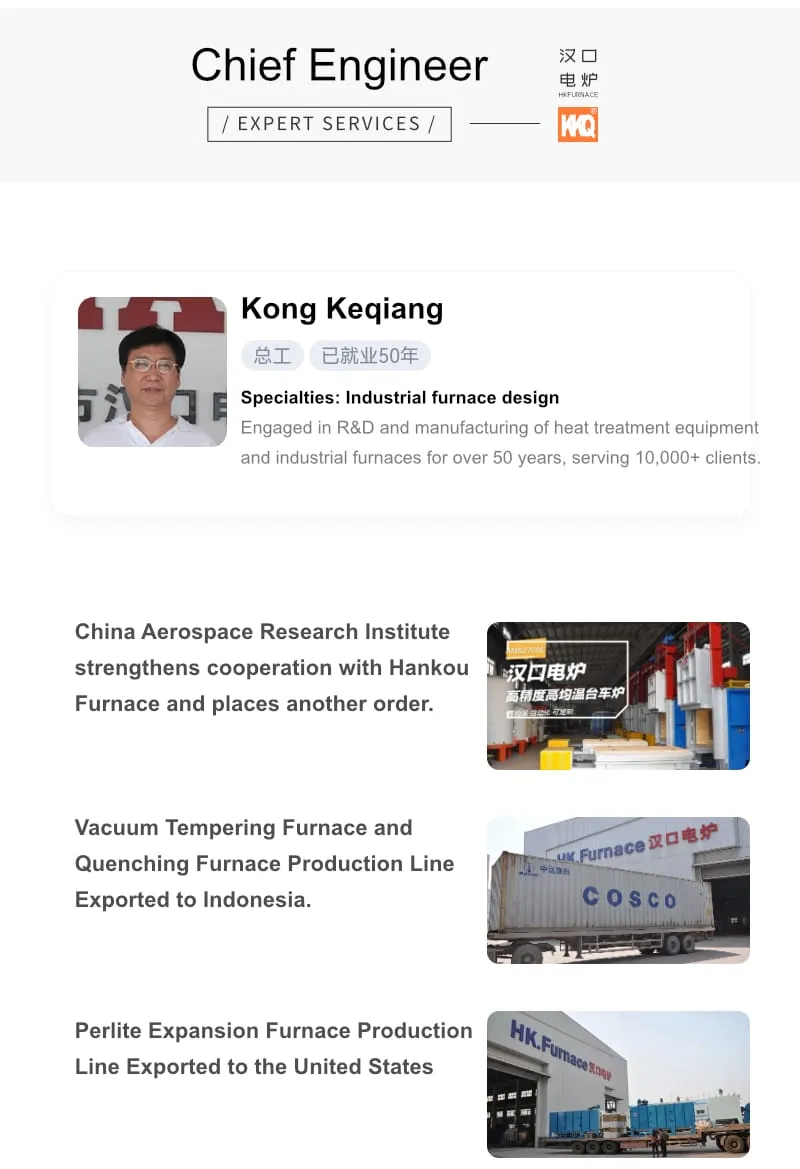
Hankou Furnace boasts 50 years of manufacturing experience

HKFurnace Wechat