

Annealing is a heat treatment process in which steel or various metal mechanical parts are heated to an appropriate temperature, held for a period of time, and then slowly cooled to obtain a structure close to the equilibrium state. In the machinery manufacturing industry, annealing is usually used as a preparatory heat treatment process in the manufacturing and processing workpieces.
1. Full Annealing is a process method that heats steel workpieces or various mechanical parts to an appropriate temperature above the critical point Ac3, holds the temperature in a furnace and cools slowly and gradually. Its purpose is to refine the structure, reduce Hardness , improve machining performance and remove internal stress.
2. Full Annealing It is applicable to Medium Carbon Steel and medium-carbon Alloy Steel steel castings, welded parts, rolled parts, etc.
3. Workpiece charging: Generally, medium and small workpieces can be directly loaded into the furnace at the annealing temperature, or can be charged into the furnace Low Temperature , and cool Liter with the furnace.
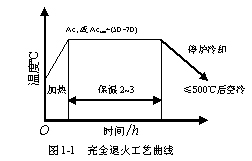
4. Holding time: Holding time refers to the total time calculated from when the furnace instrument reaches the specified annealing heating temperature until the workpiece stops heating in the furnace and starts cooling down. When workpieces are stacked, it is mainly estimated based on the furnace loading condition, and it is generally 2~3h.
5. Workpiece cooling: After heat preservation is completed, generally cut off power (fire), stop heating, close Furnace Door and gradually cool slowly to 500°C, then it can be taken out of the furnace and air cooled. For certain workpieces with high alloy element content, for which Hardness is still relatively high after cooling in the above manner, the isothermal cooling method can be used, that is, holding heat near 650°C for 2~4h and then furnace cooling to 500°C.
Full Annealing Process Curve, see Figure 1.1:
Stress Relief Annealing is a process method that heats the workpiece to an appropriate temperature below Ac1, keeps it warm for a certain period of time, and then gradually and slowly cools it. Its purpose is to remove residual stress generated after mechanical processing, deformation processing, casting, forging, heat treatment and welding.
1. Stress Relief Annealing Process curve, see Figure 1-3.

2. The process parameters of different workpieces Stress Relief Annealing are shown in Table C.
3. The temperature of Stress Relief Annealing should generally be 20~30℃ lower than the temperature of the last Tempering , so as not to reduce Hardness and mechanical properties.
4. For thin-walled workpieces and easily deformable welded parts, the annealing temperature shall be set below the lower limit.
5. Low Temperature Aging is used after semi-processing of the workpiece (such as after rough machining or the first finishing), and generally a lower temperature is used.
Table C Stress Relief Annealing Process and Low Temperature Aging Process
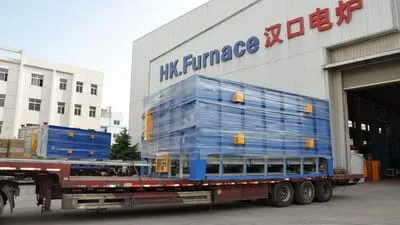
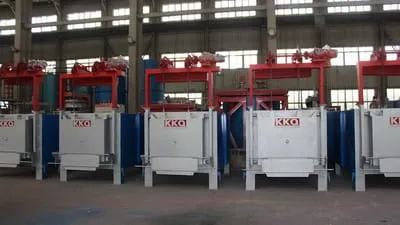
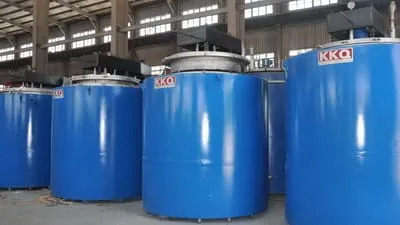
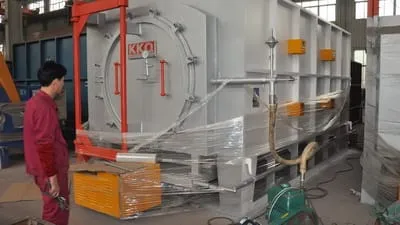

It collects on-site cases of annealing furnaces across China
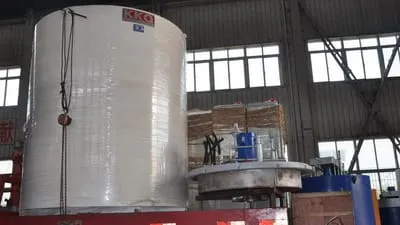
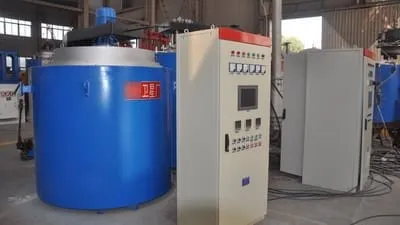
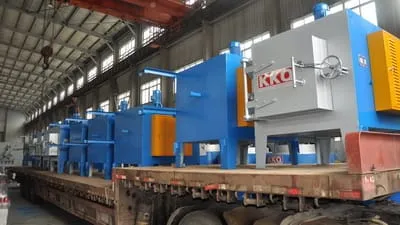
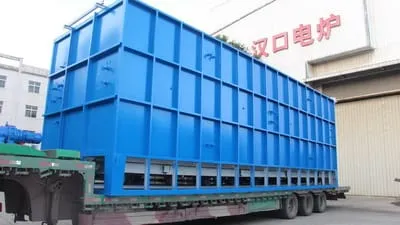
Hankou Furnace boasts 50 years of manufacturing experience

HKFurnace Wechat